Our thinking
Notes on prediction, granularity and luck.
Short pieces on the ideas behind our work: S-curves, granularity, barriers to entry, forecasting with two numbers and a timeline, and the difference between risk and uncertainty.
 Liverpool FC vs. Man City: weaponizing analytics on the pitchMan City won the statistics and lost the match. What Liverpool's style says about analytics applied to a game, and why the game will change.
 Confirmation bias is not your problemConfirmation bias only hurts a wrong investment thesis. The real question is how to avoid forming one, and what Kahneman and Tversky say about it.
 To our Private Equity clients and friends: take the risk, not the uncertaintySellers give less information as competition for deals rises. Why accepting uncertainty is different from taking a risk, and why walking away is sometimes the answer.
 The Gender Pay Gap at UberA study of 1.9 million drivers explains a 7% pay gap with speed, experience and choices of when and where to drive. An example of a clear answer from granular data.
 Strategic due diligence and forecasting: two numbers and a timelineA strategic due diligence is a forecast. Frank Knight's distinction between risk and uncertainty, and what a forecast needs to be worth something.
 The Vista and the BubbleAdd up what every competitor in a small market believes about its future and the total rarely makes sense. Reading market constraints through the aggregate view.
 A tale of two prediction gamesWhy predicting the stock market with data science fails, and why predicting a private company's performance does not. The two games are not the same.
 Predicting market contractionTrees stop growing but do not shrink. Markets do. What forecasting research says about seeing a contraction coming, and why continuity bias fights it.
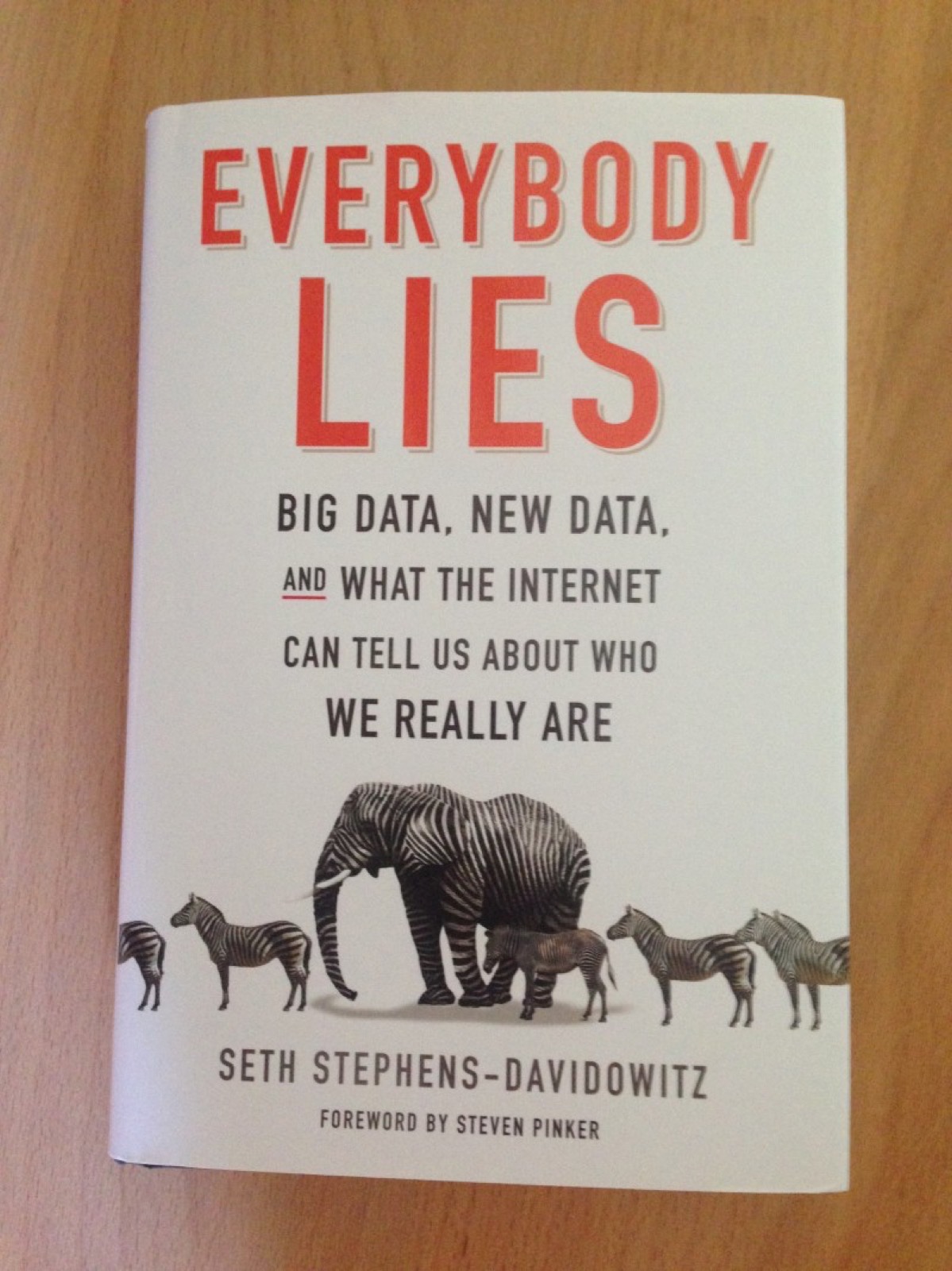 Our book of the month is “Everybody Lies…”Seth Stephens-Davidowitz on search data as the new microscope, and the uncomfortable claim that for prediction, causation is overvalued.
 Absolute Income MobilityRaj Chetty's research on the fading American dream: children born in the 1940s had a 90% chance to out-earn their parents; those born in the 1980s, about 50%.
 The predictive elegance of the S-CurveVery few processes are linear. The S-curve is the shape of a limiting factor, and that is exactly what gives it predictive value.
 Build-up vs. MoneyballWhat buying baseball players and buying companies have in common, and what a build-up strategy can learn from breaking an acquisition down into qualities.
 GranularityIn every industry there is a level where things actually happen. Strategy consulting should have the rigor of a social science, and it starts there.
 Barriers to entry. What barriers to entry?The theory says high entry costs protect incumbents. The practice says new entrants keep arriving as long as customers do. A word of caution for investors.
 Not unique, yet successfulMost portfolio companies are not unique and perform well anyway. How that works, and the evolutionary logic behind it.
 A distinct lack of uniquenessOver 150 mid-cap due diligences and almost no claim to uniqueness in any of them. The case for a small strategy for a world without it.